WinSpirit payment methods, currencies and withdrawal limits
 Available in AU
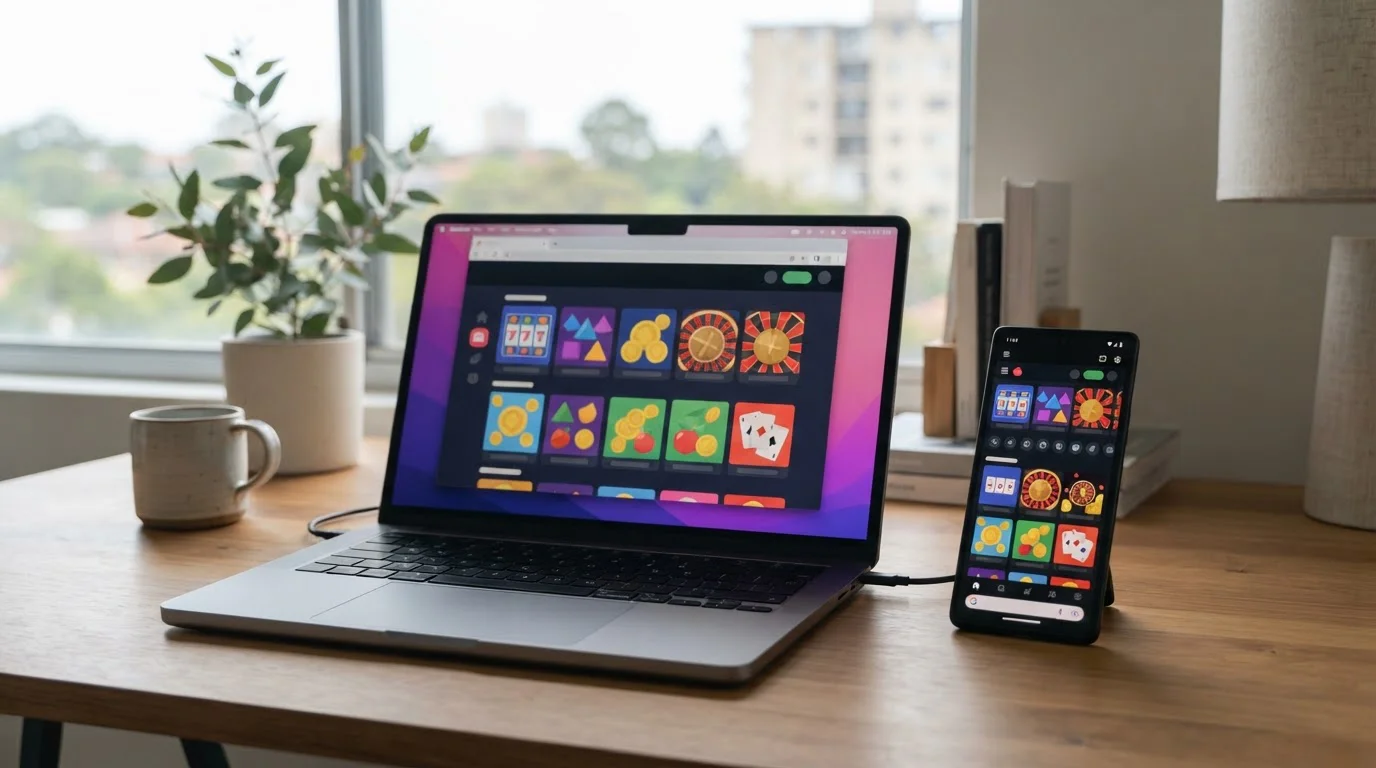
WinSpirit uses a hybrid cashier with conventional payment rails and a broad set of cryptocurrencies. The cashier lists Visa, Mastercard, bank transfer, voucher and e-wallet options alongside BTC, ETH, USDT, USDC and several other coins. AUD is among the supported fiat currencies, while the listed withdrawal caps are denominated in USD.

Table of Contents
- Cards, bank rails and vouchers form the fiat side
- Crypto payments add network and custody considerations
- AUD support and settlement currency are different questions
- Listed withdrawal caps are USD 14,000 weekly and USD 60,000 monthly
- Payment records help separate cashier and provider issues
- Cashier choices have different practical failure points
- Method selection starts with the transaction path
- Payment structure defines the practical trade-offs
- Explore the related account and licence context
Cards, bank rails and vouchers form the fiat side
Fiat methods include Visa, Mastercard, bank transfer, Neosurf, Inpay, Flexepin, MiFinity and CashToCode or e-voucher options, together with other e-wallet and bank routes. These methods describe the platform’s cashier mix; they do not imply that every route is available in every location or on every transaction.
| Method group | Examples | What to consider |
|---|---|---|
| Cards | Visa, Mastercard | Card issuers can apply their own transaction controls or merchant restrictions. |
| Bank | Bank transfer, Inpay | Bank routes can differ from card payments in settlement and reversal mechanics. |
| Voucher / cash-code | Neosurf, Flexepin, CashToCode/e-voucher | Voucher products can have fixed denominations and separate issuer terms. |
| E-wallet style | MiFinity and other wallet options | Wallet availability and account requirements depend on the payment provider. |
| Cryptocurrency | BTC, ETH, BCH, XRP, DAI, LTC, USDT, USDC, DOGE, TRX, SOL | Network transfer mechanics, price movement and irreversible transactions matter independently of casino terms. |
AUD is among the supported fiat currencies. That shows the cashier’s currency coverage, but WinSpirit’s online casino service is prohibited from being offered to people in Australia, so currency support should not be read as lawful Australian availability.
Crypto payments add network and custody considerations
The cryptocurrency list covers Bitcoin, Ethereum, Bitcoin Cash, XRP, DAI, Litecoin, Tether, USD Coin, Dogecoin, TRX and Solana. That mix covers volatile assets, stablecoins and networks with different transfer mechanics. The fact that a coin appears in a cashier does not remove the normal risks of sending crypto.
- Price movement: BTC, ETH and other non-stable assets can change in value between acquisition, deposit and later conversion.
- Irreversibility: a correctly broadcast blockchain transaction generally cannot be reversed through a card-style chargeback process.
- Address accuracy: users need to match the receiving address and any required network details before sending.
- External fees: wallet or network costs are separate from any fee the casino itself may charge.
Stablecoins such as USDT and USDC reduce one kind of price exposure relative to assets such as BTC, but they still involve network selection, wallet custody and transaction finality. Those are payment-system characteristics rather than guarantees about the casino cashier.
AUD support and settlement currency are different questions
A cashier can support a display or account currency without every underlying payment rail settling directly in that currency. AUD support therefore shows which currency the account can use, not how each payment rail settles or converts it.
This distinction matters most when a payment account, card issuer or crypto exchange uses another base currency. Currency conversion can occur outside the casino environment, and any conversion spread or provider charge belongs to that external service unless the cashier itself publishes a separate fee.
Account or cashier currency
The denomination used to display balances or transact within the platform.
Funding currency
The currency held by a bank, card, wallet or exchange account before a transaction.
Network asset
For crypto, the coin or token moved on a blockchain network.
Keeping those layers separate prevents a supported-currency label from being mistaken for a promise about exchange rates, card acceptance or final settlement costs.
Listed withdrawal caps are USD 14,000 weekly and USD 60,000 monthly
WinSpirit’s listed withdrawal caps are USD 14,000 per week and USD 60,000 per month for WinSpirit. These figures are best used as planning boundaries rather than as a prediction of approval or processing time.
For example, a planned USD 10,000 total within one week sits USD 4,000 below the listed weekly cap. A planned USD 20,000 total in the same period would sit USD 6,000 above it. The calculation says only how a planned amount compares with the listed cap; it does not say whether a specific withdrawal will be approved, delayed or paid.
- Choose the relevant period: weekly or monthly.
- Compare the planned withdrawal total with USD 14,000 or USD 60,000.
- Subtract the planned total from the applicable cap.
- A positive number is remaining room under the listed cap; a negative number is the amount above it.
The same calculation is available on the homepage withdrawal-limit checker. It runs locally in the browser and uses the same two cap figures.
Payment records help separate cashier and provider issues
Hybrid cashiers involve more than one system. A transaction can touch the casino account, a payment processor, a bank or card issuer, and in crypto cases a wallet and blockchain network. When something goes wrong, identifying which stage produced the problem is more useful than treating every failure as a single cashier event.
For fiat payments, useful records include transaction references, card or bank confirmations, and the amount and currency shown by the payment provider. For crypto, the transaction hash, sending address, receiving address and chosen asset are the core records. These details do not resolve a dispute by themselves, but they make it possible to distinguish a broadcast network transfer from an account-crediting question.
- Record the amount and currency before sending.
- Keep the external payment reference or blockchain transaction hash.
- Check whether the transfer has completed at the payment-provider or network layer.
- Then compare that record with the casino account entry rather than assuming the two systems update at the same stage.
This approach is particularly useful with crypto because transaction finality and casino account crediting are separate events. A completed blockchain transfer only shows that the network moved the asset to the destination address; it does not itself describe how an operator applies account or withdrawal rules.
Cashier choices have different practical failure points
Cards, bank rails, vouchers, wallets and crypto do not fail in the same way. A card transaction can be stopped by an issuer; a voucher can be limited by denomination or issuer rules; a bank payment depends on account and settlement details; a crypto transfer depends on address and network accuracy. Treating all methods as interchangeable can hide these differences.
- Keep records of transaction identifiers and payment-provider confirmations.
- For crypto, verify the destination address and network before broadcasting a transfer.
- For card or bank payments, review the payment provider’s own terms and controls.
- Separate a casino’s listed withdrawal cap from payment-network limits imposed elsewhere.
The account guide covers identity verification and support, while the mobile guide explains browser and PWA access. Australian legal status is covered separately in the licence section.
Method selection starts with the transaction path
The most useful way to compare the methods is to follow the path money takes. Card payments begin with an issuer and card network. Bank transfers move through banking rails. Voucher products add a prepaid or code-based intermediary. Wallet products introduce a separate stored-value account. Crypto transactions move an asset from one wallet address to another over a blockchain network. Each route shifts where checks, delays and irreversible steps can occur.
That structure also affects what evidence is available if a transaction needs to be traced. A bank or card payment produces provider references and account statements. A voucher creates a purchase or redemption record. A wallet provider keeps its own transfer history. A blockchain transaction produces a public transaction identifier that can show whether the network accepted and settled the transfer. None of these records alone proves how the casino will treat a withdrawal request, but each can identify whether the external payment leg completed.
For practical comparison, three questions are enough: which system holds the money before the transfer, which system records the transfer, and which step can no longer be reversed. Those questions are more useful than assuming that every method labelled as available behaves the same way.
Payment structure defines the practical trade-offs
WinSpirit’s cashier is notable for breadth: mainstream cards and bank-style rails sit alongside vouchers, wallets and eleven cryptocurrencies. That gives several transaction models rather than one uniform payment experience. The listed withdrawal caps add a concrete planning constraint, while crypto introduces volatility and irreversibility that do not apply in the same way to fiat rails.
Choosing between those categories is therefore about understanding how each rail moves money and where its risks sit. No single method is universally faster, cheaper or more reliable than another; the right choice depends on the transaction path.
Explore the related account and licence context
- WinSpirit overview
- Account, verification and support
- Licence and Australian status
Created by the ”WinSpirit Casino AU” editorial team.